In my introduction post, I briefly talked about the impact of activist Lech Wałęsa and the Solidarity movement in the city of Gdańsk. While I wait to begin this Football Manager save, I wanted to research this further, I’m a real history nerd you see, and this plays a huge part in the team(s) I opt to manage within FM.
Lech Wałęsa joined the Lenin Shipyard (now Gdańsk Shipyard) in 1967 as an electrician. From early on in his career, he took a great interest in workers’ rights and concerns for the conditions in which they were carrying out their jobs. He continuously encouraged his colleagues to protest against the communist regime in power at the time. Wałęsa helped to organise the strikes against rising food prices. Such protests at this time were deemed to be illegal, and so the government responded with force, consequently 44 people were killed and over 1000 injured.
In 1976, Wałęsa was fired from his job at the Gdańsk Shipyard because of his involvement in illegal unions, strikes, and a campaign to commemorate the victims of the 1970 protests. Following his departure from the shipyard, he worked as an electrician for several other companies but his activism led to him meant it was never too long before he was laid off again. Additionally, Wałęsa and his family were under constant surveillance by the Polish secret police; his home and workplace were always bugged. Over the next few years, he was arrested on multiple occasions for participating in dissident activities.
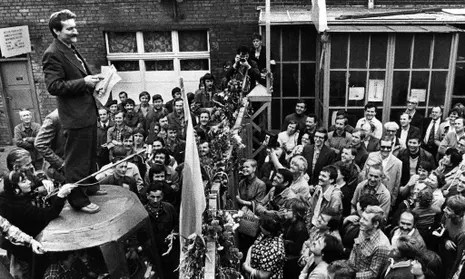
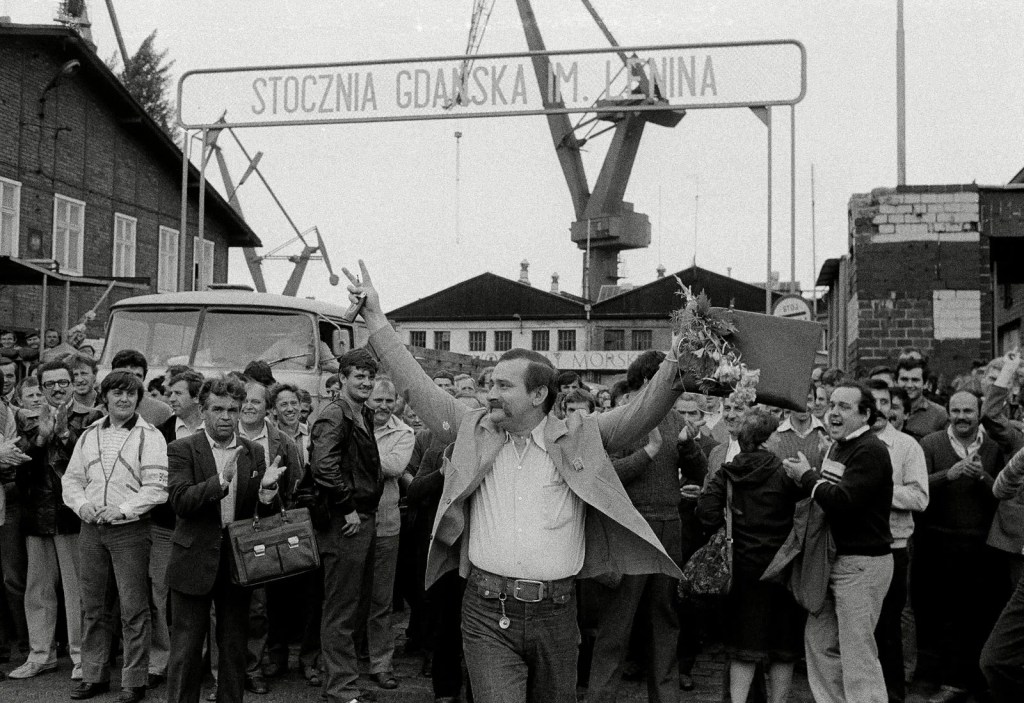
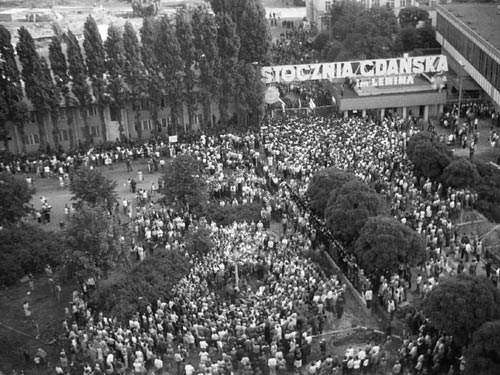
Following the 1980 strikes led by Wałęsa that were a response to another increase in food prices the trade union, Solidarity was born with Wałęsa as its chairman. Solidarity’s membership grew exponentially, eventually claiming over 10 million members—more than a quarter of Poland’s population.
Wałęsa held his position until December 1981, when General Jaruzelski declared martial law in Poland. Wałęsa and many other Solidarity leaders and activists were arrested and he was jailed for 11 months and Solidarity was outlawed. In 1983, Wałęsa was awarded the Nobel Peace Prize for his activism and it is one night in 1983 that inspired this blog post.
On the 28th September 1983, Lechia Gdańsk took on Italian giants Juventus in the European Cup Winners’ Cup. With this being Lechia’s first foray into Europe the tie was met with great anticipation from fans. Giovanni Trapattoni’s Juve boasted a star-studded squad with the likes of Paolo Rossi, Michel Platini and Zbigniew Boniek on the books.


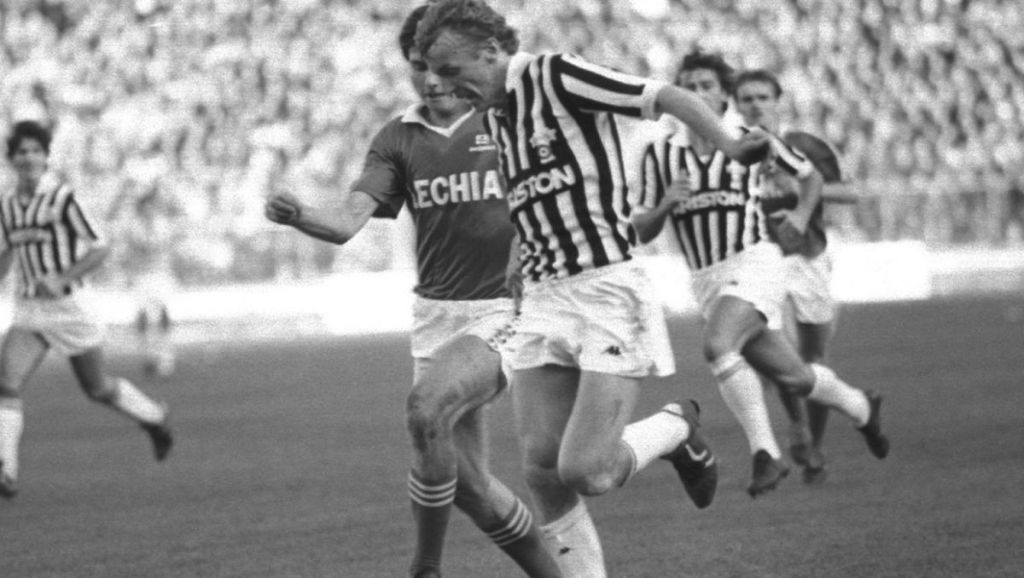
At this time, Poland was a very fragmented country. The hope brought about with the creation of the Solidarity movement had largely disappeared and Jaruzelski’s martial law had just been lifted. The ever-rebelious city of Gdańsk though, was always at the heart of resistance. During these times there were only three places where people could express their anti-system views. The first place was, of course, the shipyard and the second was at the Church of St Bridget. The third? The Lechia Gdańsk stadium.
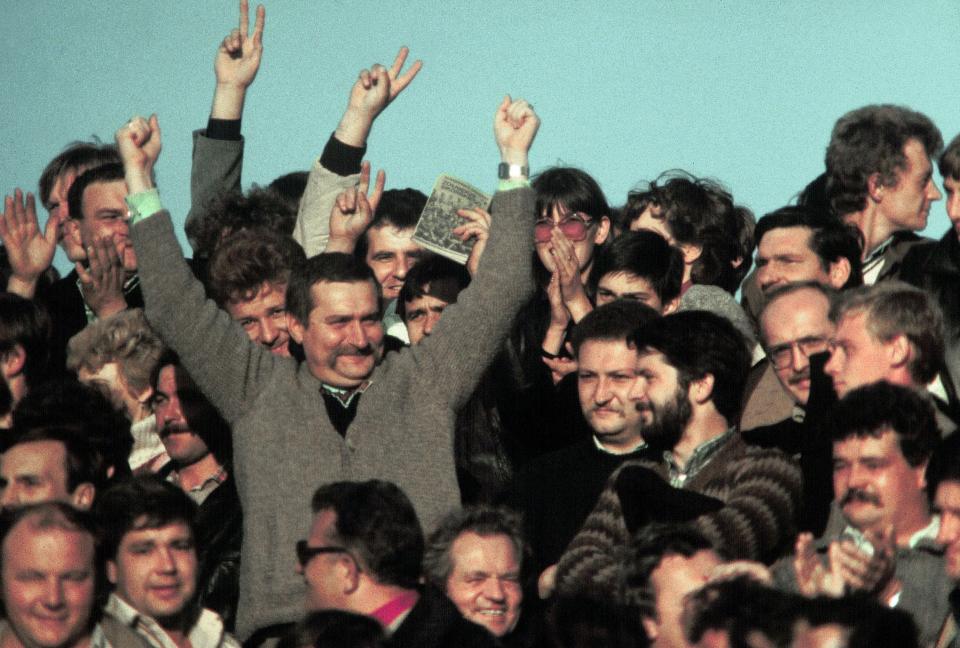
With the Juventus game being televised, Solidarity and Lech Wałęsa decided there was no better opportunity to remind the public that they were still there, fighting for change. Wałęsa simply had to be there.
With 30,000 people at the game, getting into the stadium relatively incognito was not a problem for Wałęsa. The security forces had information that Wałęsa would be there but could not arrest him as the government did not recognise Solidarity as a political party and therefore Wałęsa was considered a “private person” rather than a political activist.
There had been some attempts to discredit Wałęsa. A day earlier, state television published a heavily edited discussion between Wałęsa and his brother in which he was portrayed as being very vulgar and caring only about money. The authorities had hoped that this would lead to Wałęsa being booed at the stadium.
However, the opposite happened. In the first half, fans were mainly focused on the game but, at half-time, things changed – quite dramatically. Piotr Adamowicz, a Solidarity member went and spoke to the camera crews from NBC and CBS, who subsequently trained their cameras on Wałęsa in the crowd.
It began.
First quietly, then getting louder and louder. “Solidarnosc! Solidarnosc! Solidarnosc!” (Polish for Solidarity). State media tried to report that it was only two or three thousand fans chanting but it was far more than that. It was the whole stadium.
The chanting was so loud that it could be heard in the Lechia dressing room. The manager, Jerzy Jastrzebowski, commented: “We were in the dressing room during half-time when we heard it and it sent shivers down our spines, the whole ground singing ‘Solidarnosc’.”

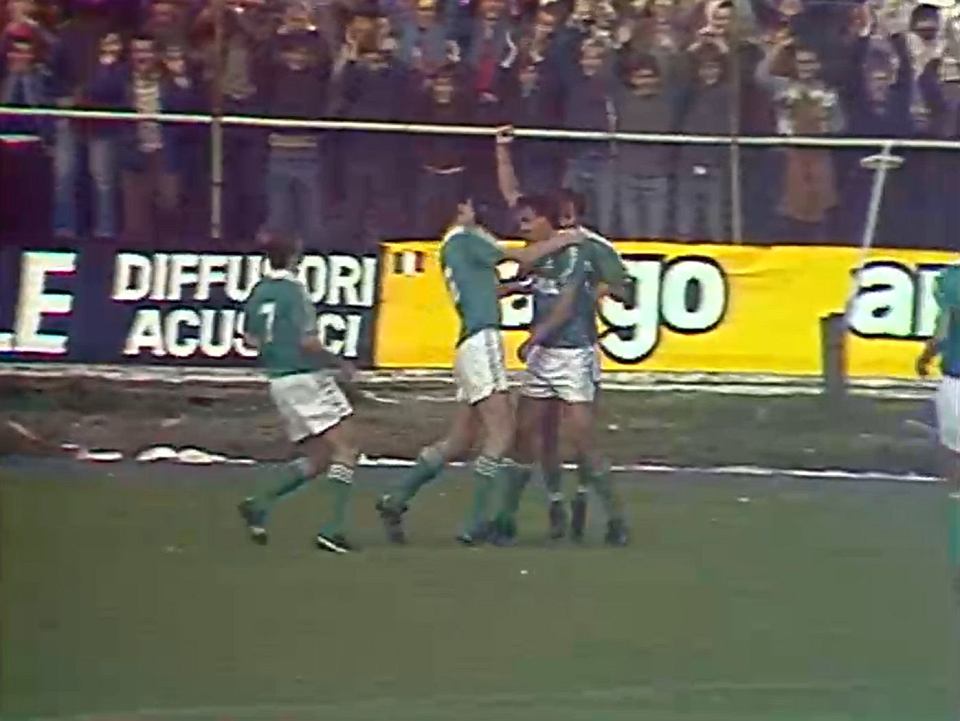
The government-controlled state television was so perturbed about the rest of the country hearing these chants that they delayed the transmission of the second half by six minutes whilst they considered what to do. Eventually, they decided to show it without any sound at all. Lechia lost the game 3-2 and the tie 10-2 but it was irrelevant, a much more important victory had been secured.
To avoid being caught up in any riots Wałęsa thought he should leave the stadium early. He worried for nothing, there was no trouble at all. The Lechia Gdańsk fans felt something special had just happened and did not want to ruin it.
The mid-to-late 1980s were a time of economic and political stagnation in Poland, the shelves at the supermarkets were often empty and ration stamps were introduced. It is estimated that between one and two million Poles left the country in the late 1980s.
By the end of 1990, Wałęsa was the first democratically elected Polish president since 1926. When asked about that night in Gdansk, Wałęsa commented: “Maybe they thought I would be whistled and booed after the TV programme they showed? They hoped the nation would turn their back on me? It would have been my end.”
This was not the case. It was actually a beginning. One of the Solidarity leaders once said: “What happened during the Juventus game kept us going for the next five years.”
Little did they know but in that moment when the Lechia Gdańsk fans chose to show their support for Lech Wałęsa, they changed the course of Polish history.
References:
Karol Nawrocki and Mariusz Kordek: Lechia v Juventus – More Than a Game
https://rfbl-pl.translate.goog/lechia-juventus-1983/?_x_tr_sl=pl&_x_tr_tl=en&_x_tr_hl=en&_x_tr_pto=sc
https://www.inyourpocket.com/gdansk/Solidarity-FC_72959f
https://www.irishexaminer.com/sport/soccer/arid-20195971.html
 FM Beth